An inspiring story for anyone working across tea and hospitality. A remarkable brand—currently available only in Australia—that deserves a global audience.
After speaking with Kym, co-founder of East Forged, one word stands out: impressive. What Kym and Tania have built over the past nine years—officially launched in 2020—is far more than a ready-to-drink tea. It is an expression of culture that goes beyond ingredients, format, and packaging. It brings together personality, heritage, deep knowledge, lived experiences, and a meaningful connection to both origin and profession.
East Forged is a brand built from the inside out—coherent across every touchpoint, and grounded in authenticity, taste, and care.
The story begins in 2017, when Kym, a hospitality consultant and pioneer in tea and food pairing, met Tania, a tea specialist who would go on to become a World Tea Brewing Champion. Their meeting took place at the Melbourne International Coffee Expo within a tightly connected tea community, which Kym describes as surprisingly small: “The tea industry in Australia is very small… we both had backgrounds trading in the leaf tea industry.”
Their backgrounds, while complementary, were shaped by different journeys. Tania’s expertise is deeply rooted in origin, with extensive travel across tea-producing regions, while Kym describes herself as “more of a generalist,” albeit one enriched by study trips to Japan and years of working with hospitality professionals.
Kym’s personal story adds a further layer of meaning to the brand’s identity. “I was born in Taiwan, but I’m adopted… one of the ways I’ve learned more about my own culture has been via tea,” she explains.
Their relationship evolved during a collaborative project to age tea in whisky barrels—an unconventional experiment that revealed a shared creative mindset. “That’s where Tania and I really hit it off… we realized we could work together very well and come up with some great ideas,” Kym recalls.
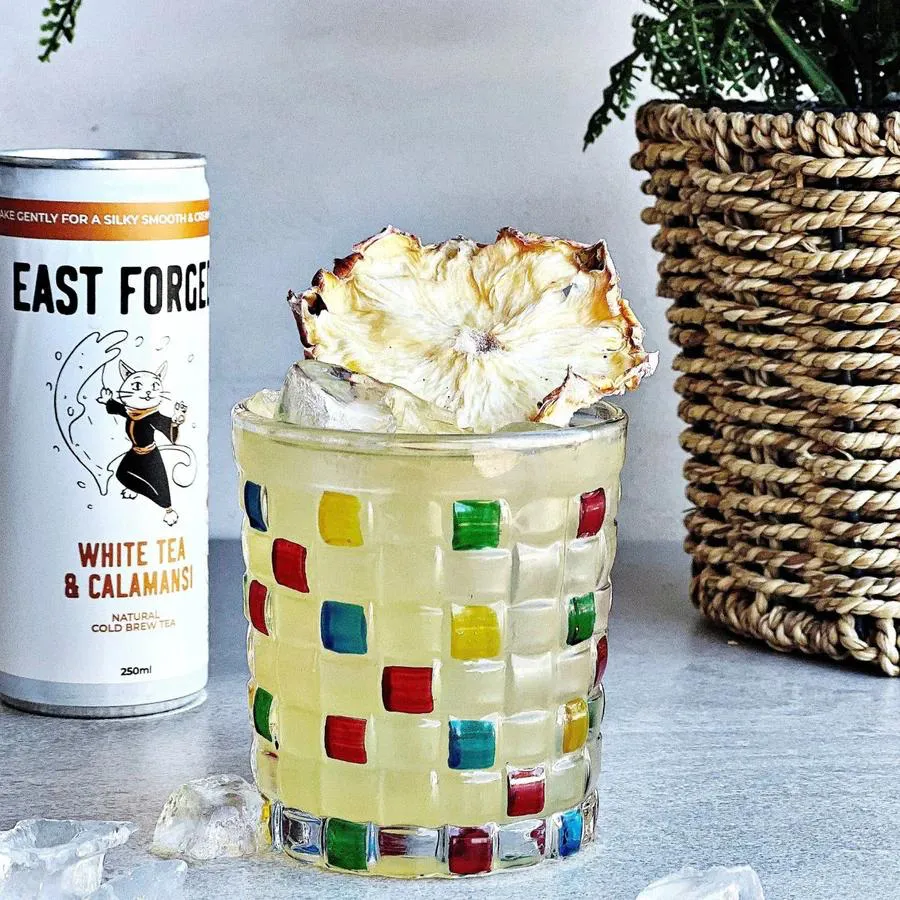
The idea behind East Forged emerged from this intersection of expertise and curiosity. On one side, Kym was working closely with hospitality venues, helping them rethink tea service and improve its value within the menu. “Part of my work is helping hospitality venues increase their ROI on their tea menus… and think about innovative ways to present tea,” she explains.
Operating in Australia’s warmer climate, this naturally led to experimentation with cold formats. “We wanted to keep focusing on cold brew teas… they’re easy to process and create a beautiful non-alcoholic beverage,” she notes.
At the same time, Tania’s experience in competitive tea brewing introduced a new dimension—one rooted in mixology and performance. “That’s the first time she was exposed to the whole idea of a beverage as an experience,” says Kym.
From this convergence came a clear realisation: “There was so much opportunity in this drink space that no one had tapped into with a tea focus… people were bringing tea into drinks, but without any real knowledge of what tea could be.”
Cultural fusion—so characteristic of Australia—became another defining pillar of the brand. As Kym explains, “the proportion of internationalism in Australia is very broad… what we see in the food scene is a blending of cultures,” an influence they consciously embraced in their flavour development.
This philosophy extends to sourcing, where authenticity and transparency are paramount. East Forged showcases Australian-grown teas wherever possible—highlighting a lesser-known origin while maintaining close relationships with producers. “We wanted to lean into showcasing Australian tea… and continue to paint the story of who we’re working with,” Kym says.
Their portfolio reflects both local identity and global influence: a mineral-rich black tea from Queensland’s volcanic soils, a refined green tea from Victoria with Japanese heritage, and a white tea sourced from China due to local production constraints.
Flavour development further illustrates this balance between familiarity and exploration:
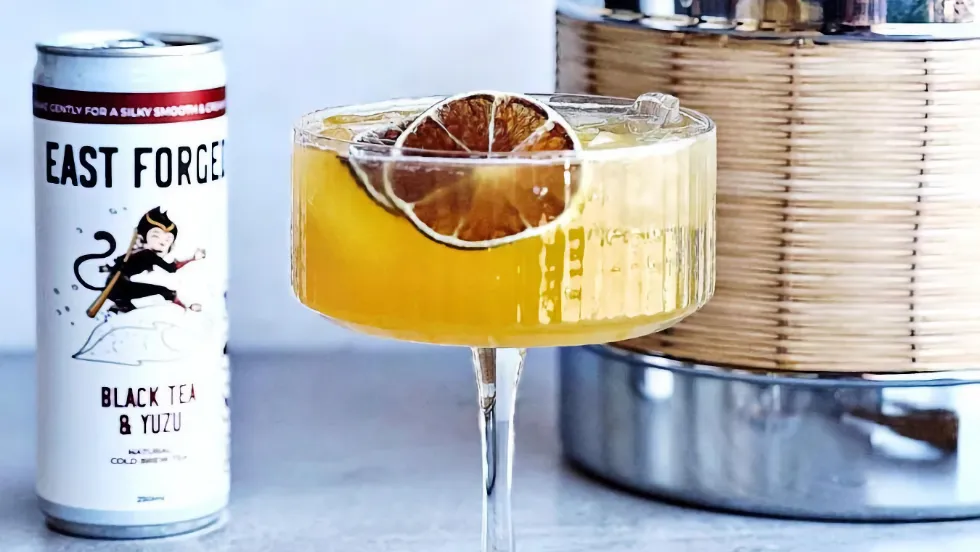
- Black Tea & Yuzu: a sophisticated evolution of the classic tea-and-lemon pairing. “It’s a riff on black tea and lemon… but lifted into something people are unlikely to make at home,” explains Kym.
- White Tea & Calamansi: deeply rooted in Australia’s multicultural landscape. As Kym explains, “Calamansi is known as the Filipino hero fruit… they use it on everything… but we have a tree in Australia from the same family, the kumquat, which people often had in their backyards.”While familiar at a domestic level, scalability led them to source calamansi more broadly, preserving its bright, tart profile while anchoring it in a story of cultural connection.
- Green Tea & Pitaya: a more adventurous profile, combining subtle sweetness with earthy notes. Originally inspired by more experimental ideas, it became a way to introduce something vibrant yet approachable, drawing from tropical fruit traditions across cultures.
Among these, Black Tea & Yuzu remains the best-selling flavour—its familiarity offering a natural entry point for consumers exploring the range.
Ultimately, East Forged’s success lies in its ability to deliver more than a drink—it offers a complete experience. This is particularly relevant in hospitality, where the demand for premium non-alcoholic options continues to grow. Tea, with its balance and versatility, fits naturally into this evolution. As Kym observes, “people were very happy to sit with our drinks… particularly with food, because tea has this lovely, not overpowering quality.”
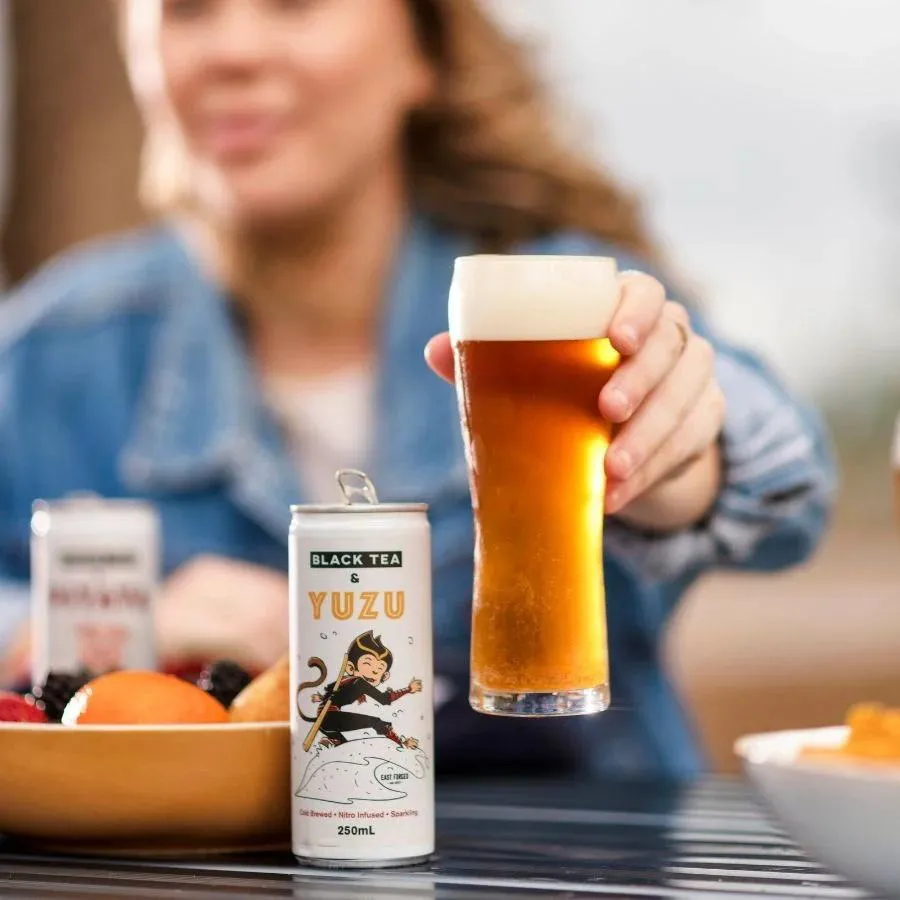
Beyond the liquid itself, this philosophy extends to the brand’s visual identity. The appearance of their cans is stricking and unusual… “We didn’t want to put out a brand or create a product that’s all about health messaging and telling people what they’re doing is wrong and they should be doing this, we wanted to get to a position where we wanted people to trust us. We would make the best drink that we possibly can, innovative, delicious, healthy etc. And we just want you to have a bit of fun with it.” And this is the origin of the three distinctive “tea pets” featured across the range—a cat, a monkey, and a pig—that are not just decorative. Tea pets are small clay figures placed on a tea tray during Chinese Gongfu tea ceremonies. Rooted in tea culture and personal symbolism, they reflect both heritage and playfulness. As Kym explains, her first tea pet was a cat, while the monkey references her Chinese zodiac sign, and the pig is the Chinese horoscope sign of the children of both Tania and Kym.
These elements, drawn from tradition yet reinterpreted with a light, contemporary touch, embody the spirit of East Forged: a brand that honors culture, embraces individuality, and invites consumers to engage with tea in a more joyful, healthy and human way.
Not surprisingly East Forged has won a series of awards and prizes, the latest of which was the Best Drink Innovation award in London at the 2026 World Food Innovation Awards.
The brand is not just redefining ready-to-drink tea—it is helping to reshape how tea is understood, presented, and enjoyed within the modern hospitality landscape.
“Tea is one of the world’s oldest social lubricants — a timeless beverage that continues to foster connection, conversation, and inclusivity today, and will remain vital well into the future.”